
Can 3D printing help us develop more efficient fertilisers?
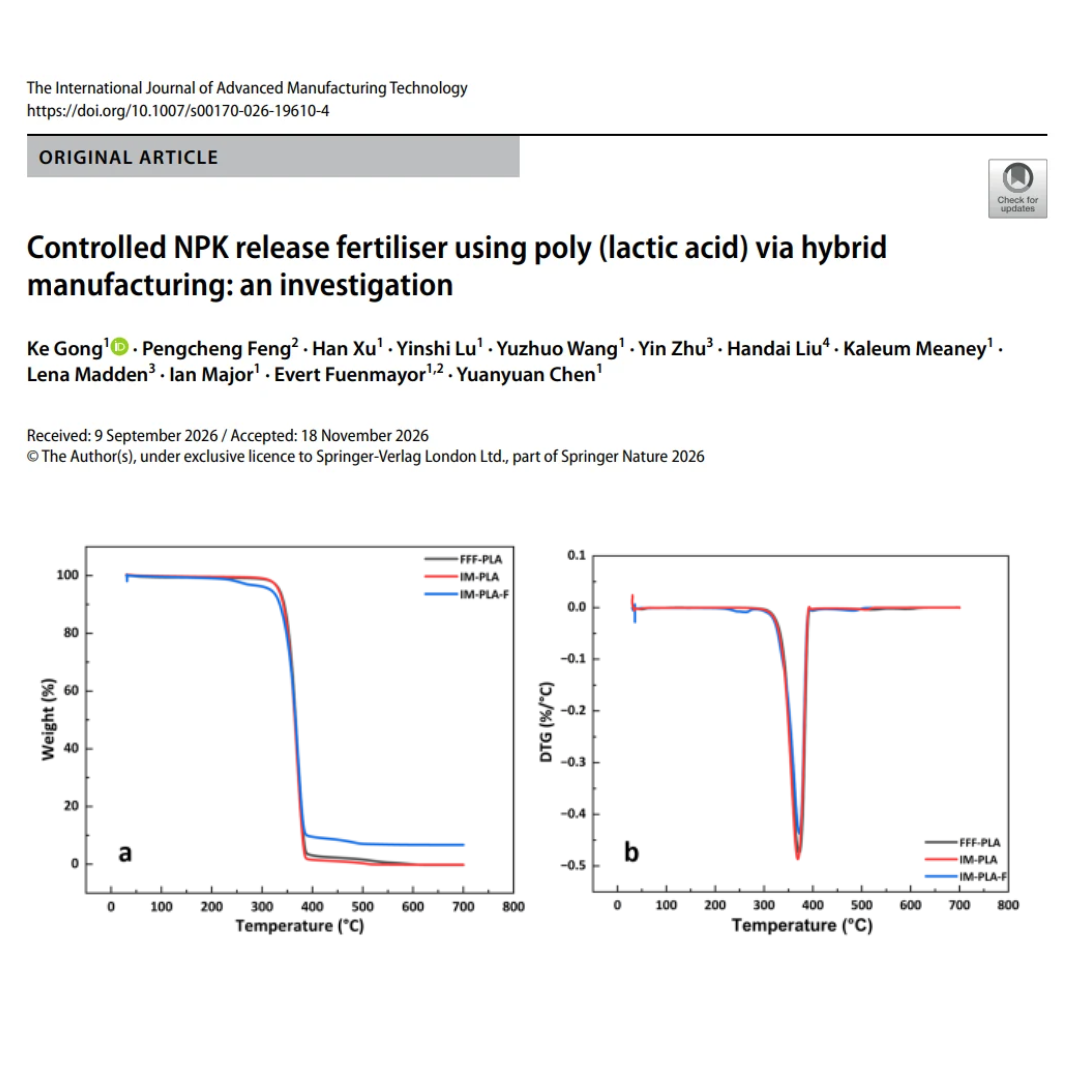
A new scientific publication co-authored by researchers from the Technological University of the Shannon (TUS), coordinator of the MAGICBIOMAT project, titled “Controlled NPK release fertiliser using poly (lactic acid) via hybrid manufacturing: an investigation”, explores how advanced manufacturing techniques and biodegradable polymers can contribute to more sustainable agriculture.
Published in The International Journal of Advanced Manufacturing Technology, the study combines 3D printing and injection moulding to develop biodegradable fertiliser delivery systems using polylactic acid (PLA).
What makes this approach particularly interesting is that the release of nitrogen, phosphorus and potassium can be controlled not only through the material composition but also through its manufacturing technique.
Laboratory results demonstrate that this manufacturing approach can slow down nutrient release, offering a promising direction for improving fertiliser efficiency and potentially reducing nutrient losses to the environment.
Congratulations to all the authors on their contribution to advancing biodegradable materials research!👏
👉 Read the full publication here:
https://doi.org/10.1007/s00170-026-19610-4